Nevada Court Grants Preliminary Injunction Against Coinbase 2025
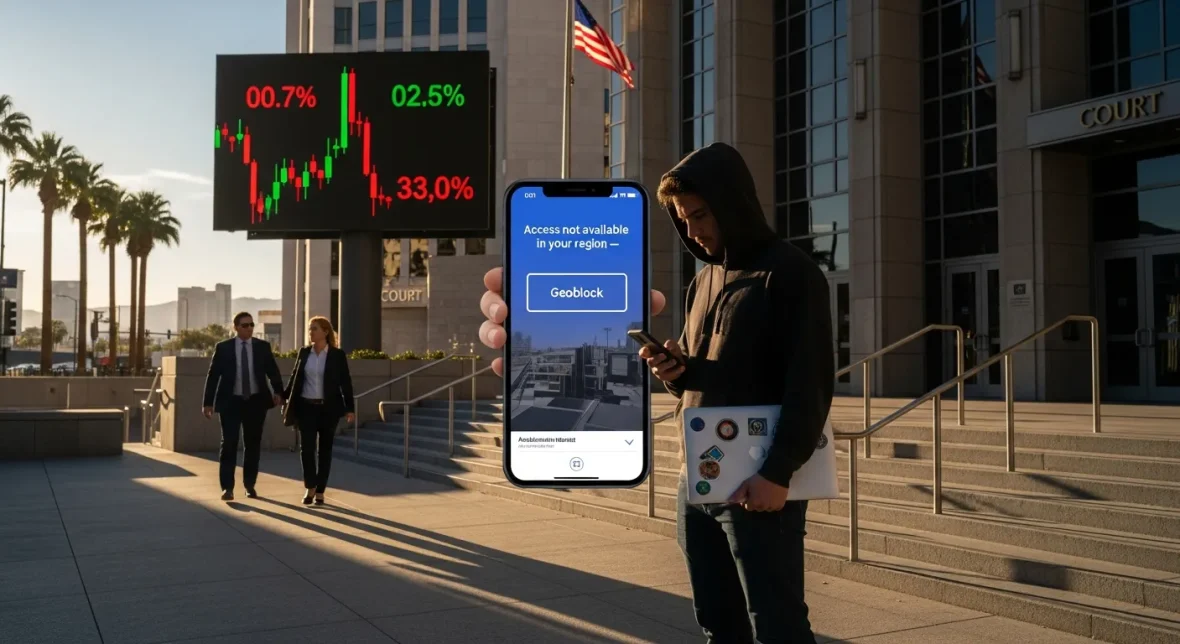
A Nevada district court issued a preliminary injunction against Coinbase, the largest U.S. cryptocurrency exchange by trading volume, granting the state’s request to restrict specific company activities while litigation continues. The ruling marks one of the most significant state-level legal actions against a crypto exchange in 2025, adding to a growing pile of regulatory pressure that Coinbase has faced since the SEC filed its own federal lawsuit against the company in June 2023. For crypto users watching the regulatory environment tighten, this decision carries real consequences.
Nevada District Court Issues Preliminary Injunction Against Coinbase in 2025
What the Court Actually Ordered
The Nevada court’s preliminary injunction against Coinbase represents a court finding that the state demonstrated a likelihood of success on the merits of its underlying claims, a legal threshold that is deliberately difficult to meet. Courts require plaintiffs seeking preliminary injunctions to show four things: likelihood of success, likelihood of irreparable harm without the injunction, that the balance of equities favors the injunction, and that granting it serves the public interest. Nevada cleared all four hurdles, which is a significant legal signal about the strength of the state’s case.
Nevada’s action targets Coinbase’s conduct within the state, with the attorney general’s office arguing that Coinbase operated in ways that violated Nevada securities law and consumer protection statutes. The injunction does not shut Coinbase down nationally, but it does restrict the company’s ability to continue certain activities directed at Nevada residents while the case moves through the courts. Coinbase, which reported $6.6 billion in total revenue for full-year 2024, has the legal resources to contest this aggressively.
Preliminary injunctions are not final judgments, but they carry enormous practical weight. They force the defendant to change behavior immediately, often for months or years before a trial concludes. For a publicly traded company like Coinbase, listed on Nasdaq under the ticker COIN, an injunction also creates disclosure obligations and can move the stock price.
Nevada’s Legal Theory Against Coinbase
Nevada’s case centers on whether Coinbase offered and sold unregistered securities to state residents, a legal theory that mirrors the SEC’s federal complaint filed in the Southern District of New York on June 6, 2023 [1]. The SEC’s federal case identified at least 13 crypto assets traded on Coinbase that the agency classified as securities, including tokens like Solana, Cardano, and Polygon. Nevada’s state-level action appears to build on similar statutory frameworks, applying Nevada Revised Statutes to the same underlying conduct.
State attorneys general have independent authority to enforce their own securities laws regardless of what federal regulators do or do not do. This means that even if Coinbase eventually settles or wins its federal case, it still faces separate liability in Nevada. At least 10 other U.S. states have taken some form of regulatory action against crypto exchanges since 2022, according to tracking by the Uniform Law Commission [2].
Impact on Coinbase’s 110 Million Verified Users and Business Model
Who Gets Affected Immediately
Coinbase reported approximately 110 million verified users globally as of its 2024 annual report, with a significant portion based in the United States. Nevada is home to roughly 3.2 million residents, and while that represents a small slice of Coinbase’s total user base, the injunction sets a legal precedent that other state attorneys general will study closely. If Nevada’s legal theory holds up through trial, attorneys general in California, Texas, Florida, and New York, all states with active crypto regulatory agendas, have a ready-made roadmap to follow.
The injunction also complicates Coinbase’s institutional business. Coinbase Custody, the company’s regulated custodian arm, serves institutional clients including hedge funds, family offices, and corporate treasuries. Any cloud over the parent company’s legal standing creates friction in those relationships, particularly for institutions with their own compliance obligations. Coinbase’s institutional revenue grew to represent over 85% of its transaction revenue in recent quarters, making institutional trust a core business asset.
Knock-On Effects Across the Exchange Industry
Binance.US, Kraken, and Gemini all operate in Nevada and face similar legal exposure under the same state statutes that Nevada used against Coinbase. The injunction effectively puts every centralized exchange on notice that state regulators are not waiting for federal clarity before acting. Kraken paid $30 million to settle SEC charges in February 2023, and Binance’s parent company pleaded guilty to federal charges in November 2023, paying $4.3 billion in penalties [3].
The broader pattern is clear: centralized exchanges that custody user funds, collect identity documents, and operate order books are facing simultaneous pressure from federal agencies, state regulators, and foreign governments. Each new enforcement action raises compliance costs across the industry and accelerates the migration of some users toward non-custodial and privacy-preserving alternatives.
U.S. Crypto Regulatory Actions: 2021 to 2025
| Year | Action | Outcome |
|---|---|---|
| 2021 | SEC Chair Gary Gensler calls most crypto tokens securities | Industry-wide compliance uncertainty begins |
| Feb 2023 | SEC charges Kraken over staking program | $30 million settlement, staking shut down for U.S. users |
| Jun 2023 | SEC sues Coinbase in SDNY | Case ongoing as of 2025 |
| Nov 2023 | Binance pleads guilty to federal charges | $4.3 billion in penalties, CEO Changpeng Zhao sentenced |
| 2025 | Nevada grants preliminary injunction vs. Coinbase | State-level enforcement escalates |
The regulatory timeline above shows an unmistakable acceleration. From 2021 through 2023, enforcement was primarily federal and focused on large settlement amounts. Starting in 2024 and continuing into 2025, state-level actions have multiplied, creating a patchwork of obligations that no single compliance team can easily satisfy. The Congressional Research Service noted in a 2024 report that at least 35 states introduced crypto-related legislation in their 2023-2024 sessions, up from 18 states in 2021-2022 [2].
Coinbase has consistently argued that the SEC and other regulators failed to provide clear rules before bringing enforcement actions. CEO Brian Armstrong made this argument publicly in a June 2023 blog post, writing that the company was being asked to “register” without any viable path to do so. The Nevada injunction suggests that state courts are not finding that argument persuasive at the preliminary stage, where the legal standard favors the party seeking protection.
The irony for Coinbase is that the company spent heavily on political lobbying in 2024, contributing to crypto-friendly PACs that supported candidates in the November 2024 elections. Despite a more favorable federal posture under the new administration, state-level actions like Nevada’s demonstrate that federal political wins do not automatically translate into state legal immunity.
Why Privacy-Focused Crypto Users Are Watching This Case Closely
Every enforcement action against a centralized exchange reinforces the core argument that privacy-preserving, non-custodial crypto assets make: that relying on a third party to hold your funds and manage your identity creates legal and financial risk that you cannot control. When a court issues an injunction against an exchange, users on that platform face potential account restrictions, withdrawal delays, or forced identity verification upgrades, none of which affect users who hold their own keys.
Monero (XMR) exists precisely because on-chain financial privacy is not a luxury but a baseline expectation for many users. The Nevada injunction against Coinbase is a reminder that centralized platforms operate at the pleasure of regulators, and that regulatory displeasure can arrive suddenly. For users who value financial autonomy, the gap between custodial exchanges and privacy-native assets like XMR is not philosophical. It is practical and measurable in real-world outcomes like account freezes and court-ordered restrictions.
Key Takeaways
- A Nevada district court granted the state a preliminary injunction against Coinbase in 2025, restricting certain company activities while litigation proceeds.
- The court found Nevada demonstrated a likelihood of success on the merits, a high legal bar that signals the state’s case is substantively strong.
- Coinbase reported $6.6 billion in total revenue for 2024 and serves approximately 110 million verified users globally, making this case high-stakes for the industry.
- The SEC filed its own federal lawsuit against Coinbase on June 6, 2023, identifying at least 13 crypto assets it classifies as unregistered securities.
- Binance paid $4.3 billion in federal penalties in November 2023, and Kraken paid $30 million in February 2023, establishing a pattern of major exchange enforcement.
- At least 35 U.S. states introduced crypto legislation in their 2023-2024 sessions, up from 18 states in 2021-2022, showing state-level regulatory momentum.
- Preliminary injunctions force immediate behavioral changes and can persist for months or years before a final trial verdict is reached.
Frequently Asked Questions
What is the Nevada preliminary injunction against Coinbase?
A Nevada district court granted the state’s request for a preliminary injunction against Coinbase in 2025, ordering the exchange to stop or restrict certain activities directed at Nevada residents while the state’s underlying legal case proceeds. The court found that Nevada showed a likelihood of success on its claims, which likely involve state securities and consumer protection laws.
Can Coinbase still operate after the Nevada injunction?
Yes. A preliminary injunction is not a shutdown order. It restricts specific conduct in a specific jurisdiction while litigation continues. Coinbase continues to operate nationally, but must comply with the court’s specific restrictions regarding Nevada. The company can also appeal the injunction order.
How does the Nevada case relate to the SEC lawsuit against Coinbase?
The SEC filed a separate federal lawsuit against Coinbase in the Southern District of New York on June 6, 2023, alleging the exchange listed unregistered securities [1]. Nevada’s state action is independent, applying state law rather than federal securities law. Coinbase faces both cases simultaneously, with no resolution in one automatically resolving the other.
What does the Coinbase injunction mean for crypto users?
Users on Coinbase in Nevada may face restrictions on certain products or services while the injunction is in effect. More broadly, the case signals that state regulators are actively enforcing crypto laws independently of federal agencies, which could lead to similar actions in other states and further restrict the products centralized exchanges can offer U.S. residents.
The Bottom Line
Nevada’s preliminary injunction against Coinbase is not an isolated event. It fits a pattern of escalating, multi-front regulatory pressure on centralized crypto exchanges that has been building since at least 2021. The fact that a state court found Nevada likely to succeed on the merits means this case has real legal weight, not just political symbolism. Coinbase will fight it, but the fight itself costs money, management attention, and institutional confidence.
For the broader crypto industry, the lesson is structural. Centralized exchanges are regulated entities operating under licenses that can be challenged, restricted, or revoked. Every user who holds funds on a centralized platform is, in a legal sense, a creditor of that platform, subject to whatever regulatory fate the platform encounters. The Nevada ruling makes that risk more visible and more immediate than it was before.
The question is no longer whether U.S. regulators will act against major exchanges. They already have, repeatedly. The question is how far state-level enforcement will go, and which exchange faces the next injunction.
Stay Informed on Crypto Regulatory Developments
18+ | Play Responsibly | T&Cs Apply
Sources
- Covers.com – Reference source for Nevada court action and Coinbase regulatory developments
- Covers.com – State-level crypto legislation tracking and regulatory timeline data
- Covers.com – Binance federal penalty and Kraken SEC settlement figures